
The New Biobío Railway Bridge: Cutting-Edge Engineering and Structural Monitoring

The Biobío Region is witnessing a historic transformation in its connectivity. The State Railways Company (EFE) is making steady progress on the construction of the new railway bridge over the Biobío River, the largest in Chile. This landmark project, which is already 50% complete, will replace the old infrastructure that operated for over 130 years, marking the beginning of a new era in transportation for the southern region.
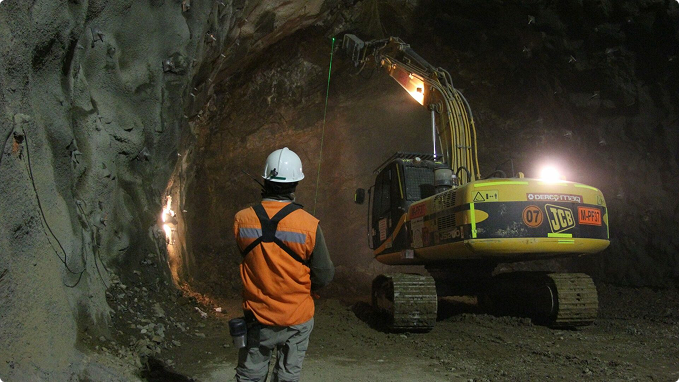
The new viaduct will connect the communes of Concepción and San Pedro de la Paz, spanning 1.8 kilometers in length. Its state-of-the-art design includes two electrified tracks that will allow for the efficient transit of passenger trains at speeds of up to 100 km/h and freight trains at 65 km/h. Furthermore, the project includes the construction of a new 325-meter tunnel excavated through the rock of Cerro Chepe, as well as modern lighting systems, acoustic barriers, and track confinement, all adhering to strict sustainability and advanced engineering criteria.
For a project of this magnitude to operate safely for decades to come, there must be absolute control over its structure.
The Challenge of Structural Monitoring
As part of the construction of this viaduct, Rodrigo Vivencio, Director of Operations at Geosinergia, explained the technical scope for ensuring bridge safety on television.
Vivencio clarifies a fundamental difference: although structural monitoring uses instruments very similar to those used in geotechnical monitoring, the objective is different. In this case, the focus is not on the ground, but on the bridge structure itself. What is being measured with millimeter precision are the loads, deformations, and vibrations.
To carry out this control, the Geosinergia team deploys specialized technology at critical points on the bridge:
- Crackmeters: These are essential in areas such as the abutments and expansion joints of the bridge. These sensors allow for the measurement of the behavior and opening of these joints, constantly verifying that they remain within safe design parameters.
- Tiltmeters: Structures are subjected to various forces that can alter their position. These instruments measure the deformations, inclinations, or "angular shifts" that the viaduct might experience.
- High-resolution laser distance meters: To ensure that the bridge maintains the exact shape for which it was designed, these laser sensors measure the distance from one point to another. This allows engineers to verify in real time whether the overall geometry of the bridge remains identical to the original design plans.
Thanks to the implementation of this rigorous structural monitoring, the new Biobío Railway Bridge will not only stand out for its modernity and efficiency, but will also have the technological backing necessary to guarantee safe travel, establishing itself as a key project for the development of southern Chile.
Check out the next part of the interview to learn more about this topic!👇
For all the details on this chapter, don't miss the full episode here




Belo Horizonte, Minas Gerais

