
Post-Failure Criteria

Throughout history, both in civil engineering and mining, structural failures have become essential case studies for industry specialists.
Throughout our career, we have had the responsibility of being on-site interpreting and analyzing the failure modes of major geomechanical events in South America, such as the tailings dam collapses in Brazil and the collapse of the M1 Transfer Station in Chuquicamata.
The detailed analysis of these major events is what fuels knowledge and refines current technological tools. This continuous learning has a clear objective: to prevent future collapses and, when an event is imminent, provide the necessary information to activate timely evacuation and safety measures .
To delve deeper into this topic, our CEO, Igor Bravo, discussed the technical details and the analysis conducted for each of these cases during his appearance on the program Minería del Mañana.
We invite you to listen to the full account at the following link:
Dam Collapse in Mariana, Brazil
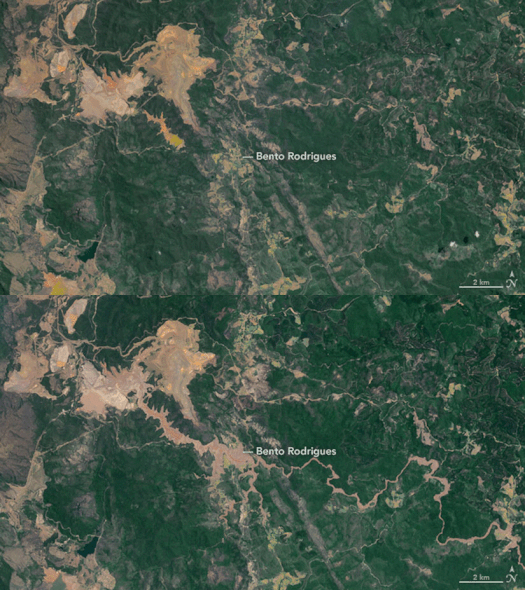
On November 5, 2015, Brazil became the center of a major crisis following the collapse of the Fundão dam, located in the city of Mariana, in the state of Minas Gerais.
The tailings dam burst, flooding the Bento Rodrigues sub-district and spreading 40 billion liters of arsenic and lead over 663 kilometers, eventually reaching the Atlantic Ocean. It caused the deaths of 19 people and is considered one of the worst environmental and mining disasters in history.
Following the damage, the Minas Gerais Civil Police issued a troubling statement: "What happened there was an announced tragedy," adding that "the community living below never knew the risk they were facing."
The mining company in charge immediately halted mineral extraction, lost its operating license, and had to face various inquiries regarding the incident.
They pledged to support response efforts by signing a preliminary commitment to allocate approximately US$260 million to an emergency support fund for prevention, mitigation, remediation, and compensation for social and environmental impacts.
Dam Collapse in Brumadinho, Brazil
"The alarms did not sound in Brumadinho"
The failure of the dam in Bento Rodrigues would not be the only tragedy the country would face. On January 25, 2019, another dramatic event occurred. The tailings dam located in Brumadinho collapsed, releasing 13 million cubic meters of mud and causing the deaths of 270 people.
After various investigations, experts once again agreed that it was "a tragedy, but not a surprise," as the conditions for a potential catastrophe were present, yet the warning signs were not properly addressed.
The lack of thorough analysis was evident, serving as a global wake-up call regarding the importance of having the necessary tools and equipment to prevent such events.
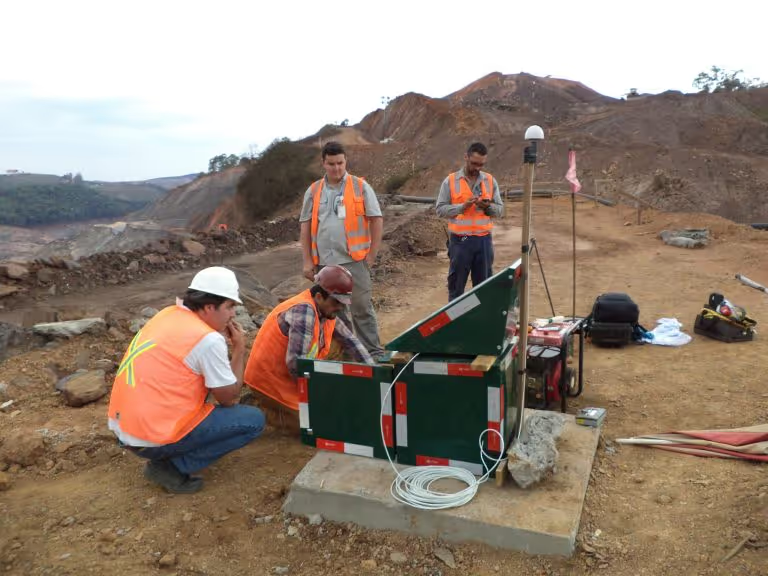
In both cases, Geosinergia was contacted to analyze what happened and provide its expert assessment. It was demonstrated that our company possessed the most advanced technology to strengthen tailings safety. We currently provide our Geotechnical and Structural Monitoring services for a large portion of the country's tailings facilities, helping to prevent incidents like those that have occurred in the past.
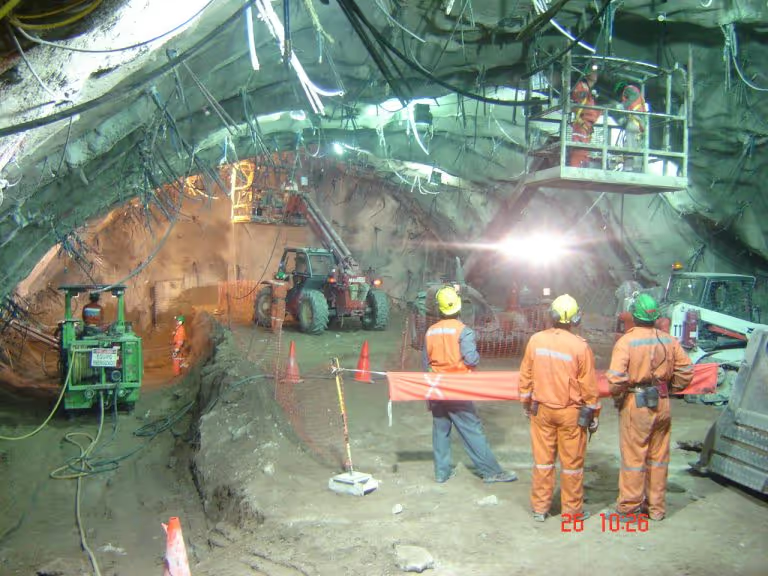
Transfer Station - Chuquicamata.
In 2007, the Codelco transfer station was severely damaged by a collapse caused by a design error. Because there was no early warning system in place, the incident was exacerbated by a failure to properly interpret extensometer data.
The impact of the accident resulted in a loss of less than 15,000 tons of fine copper production. This was achieved thanks to the timely and efficient mitigation measures implemented in response to the incident. Geosinergia applied its expertise and tools, providing valuable lessons to ensure such an event would not happen again.
Subsequently, Chile established the Post-Failure Criteria for conditions of this type, where Geosinergia helped reinforce the need for the underground mining industry to understand and utilize tools for managing collapse risk, as improper handling or interpretation of these tools can lead to further collapses. A sound design for underground excavations is essential, as is having an early warning system based on Geotechnical Instrumentation, with a clear understanding of thresholds and preventive alerts.
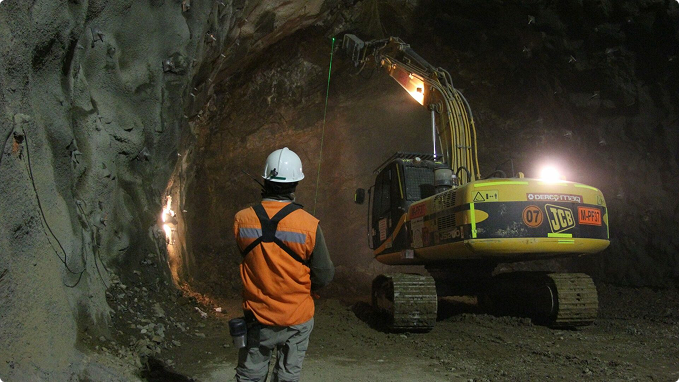
Geosinergia implemented a new geotechnical instrumentation design and field deployment, as well as establishing post-failure criteria for underground excavations.
Following the mitigation work, various mining companies in Chile contacted Geosinergia to evaluate their excavations, consider the design of Geotechnical Monitoring systems for them, and implement tools and early warning systems.




Belo Horizonte, Minas Gerais

