
El Teniente: Geotechnical challenges in the world's largest underground mine
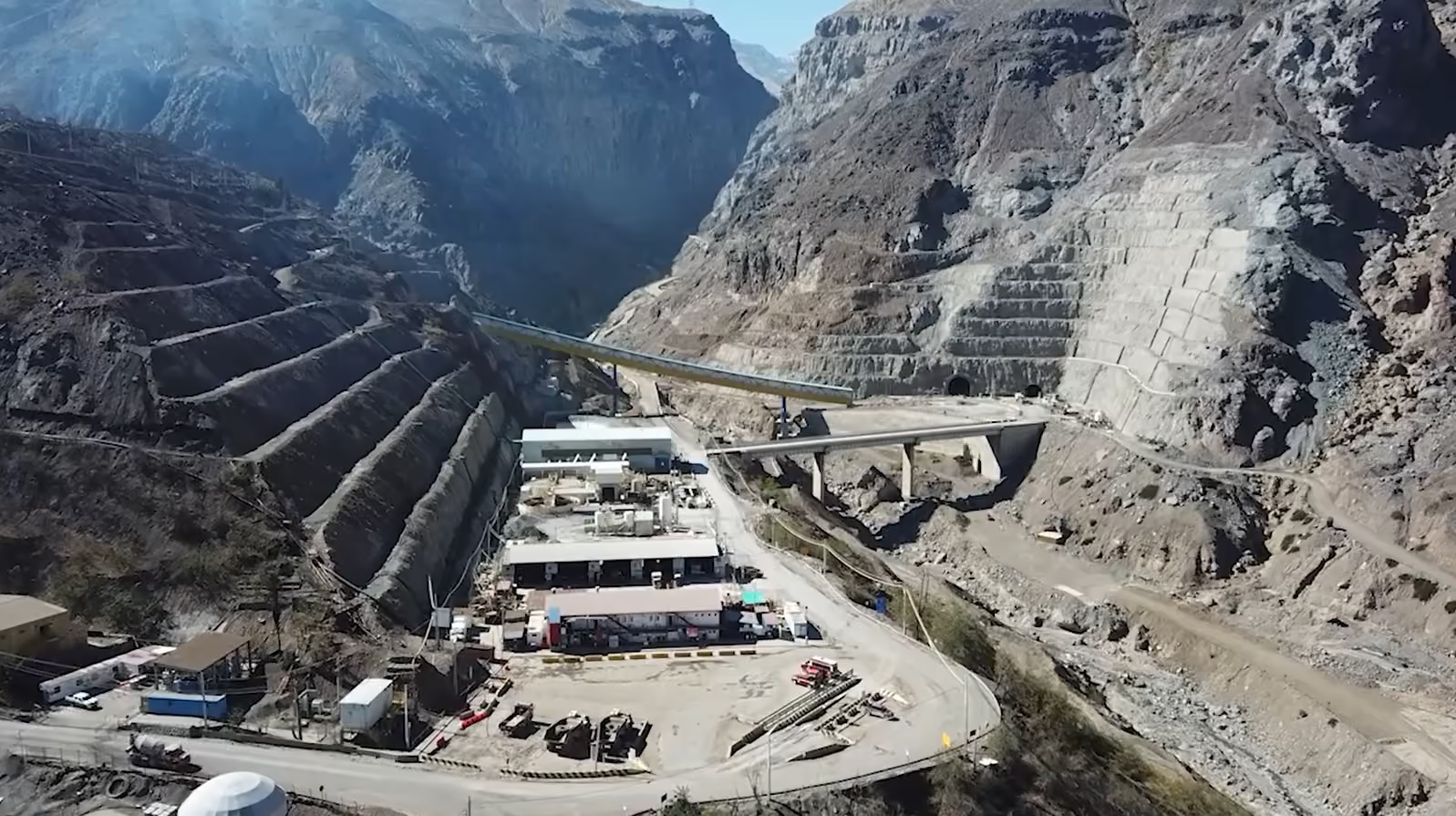
Codelco's El Teniente Division is known not only as the world's largest underground mine but also as a benchmark for large-scale extraction techniques, such as block caving . This method uses gravity to extract massive volumes of ore, which then undergoes a rigorous three-stage crushing process until it is reduced to fragments of approximately 1.27 centimeters (half an inch), the ideal size for subsequent processing.
Over the years, Codelco has implemented a major transition toward automation to protect its workers and increase productivity. However, as shallower mineral resources are depleted, mining is forced to move operations deeper. It is at these immense depths that engineering faces its greatest rival: rock mass pressure.
Mountain pressure: The challenge of deep mining
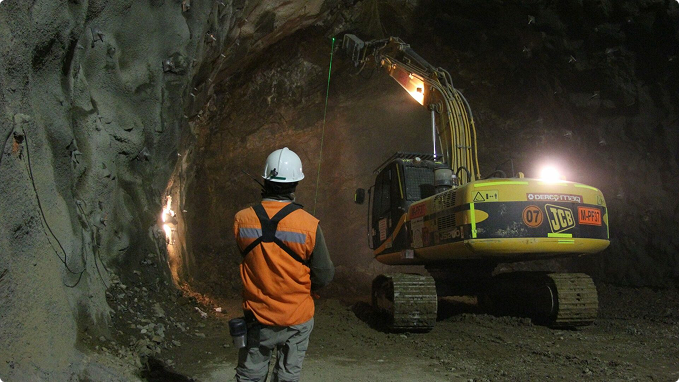
Building tunnels at great depths means dealing with colossal forces. As Igor Bravoexplains in a recent interview, the rock at El Teniente is subjected to extremely high pressures, the result of the mountain's weight and millions of years of tectonic activity.
Failing to understand the state of these forces (stresses) can lead to very dangerous excavation conditions. This becomes critical depending on the type of rock: if the rock is soft, it deforms without storing much energy. But if the rock is very hard and competent, it acts like a spring: as it is loaded, it withstands the pressure and stores energy. When it finally exceeds its strength limit, it breaks violently, producing what is known in mining as a "rockburst".
To design the appropriate supports and reinforcements to protect tunnels and workers, it is vital to know exactly how much force the mountain is bearing. And this is where the work of Geosinergiacomes in.
Overcoring: Listening to the "relaxation" of the rock
To measure stress within the mountain, Geosinergia uses a fascinating technique that works like a "reverse exercise." Instead of applying weight to a rock to see how much it deforms, they measure how the rock relaxes when the weight is removed.
The process, known as overcoring , works as follows:
- The compressed rock inside the tunnel is drilled, and a sensor equipped with strain gauges is installed.
- Next, a circular cut is made around the sensor (overcoring) to release that piece of rock (the core sample) from the rest of the mountain.
- Once disconnected from the mountain, that piece of rock, which was previously compressed, relaxes and expands.
- The sensor precisely records this "relaxation" deformation in different directions.
Afterward, that same rock sample is taken to the laboratory, where it is subjected to a load to determine its elastic properties. With this data and through back analysis,back analysis, engineers can mathematically calculate the exact state of the three-dimensional stresses (Sigma 1, 2, and 3) that existed in the mountain. With these values, the mine can design safe support systems and make operational decisions.
Seismic monitoring: Real-time surveillance
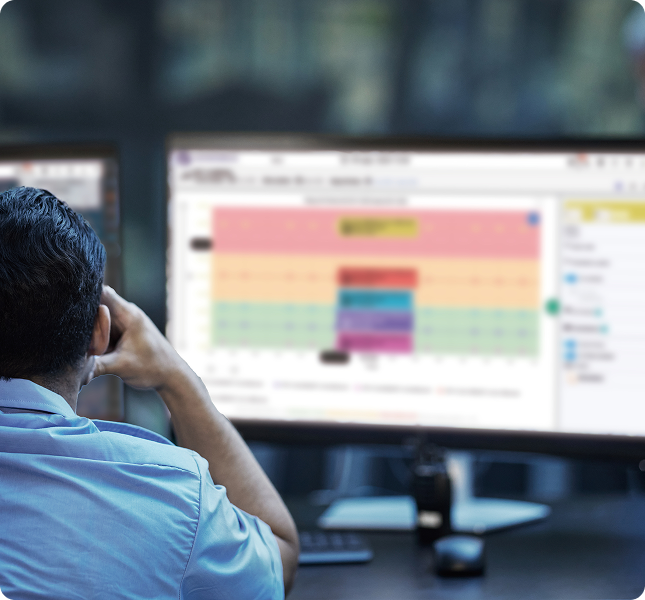
In addition to measuring stress, it is essential to monitor the fractures developing within the rock mass. For this, El Teniente relies on one of the most advanced seismic monitoring networks in the world, using geophones and accelerometers that allow for 3D seismic event localization and magnitude measurement.
In this area, Geosinergia also provides top-tier technology, introducing innovations such as wireless sensors that allow the mining industry to adapt to new requirements, ensuring that copper extraction remains a safe, efficient, and world-class process.
We invite you to watch and learn more about this topic in the next part of the interview!👇
If you want to know all the details of this chapter, don't miss the full episode here:



Belo Horizonte, Minas Gerais

